How MTA is spending its money
Wow, they found the secret to stopping fare evasion
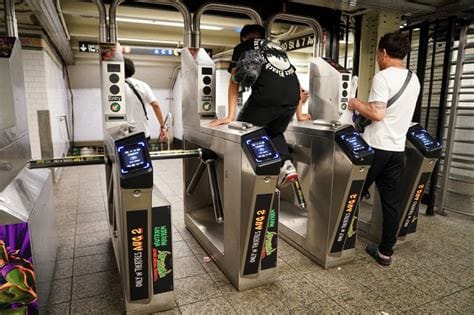
New York's subway and bus operator, MTA, has forever been facing budget crises. In recent years, it has to contend with the work-from-home trend, and rampant fare evasion.
The MTA also appears eager to buy whatever vendors sell them, including snake oil and hot air.
I previously wrote about the so-called "Select Buses" (link). The MTA spent money on a system that required installing special fare machines on sidewalks, from which all passengers, including those who held weekly or monthly passes, must obtain a paper receipt prior to boarding the bus. When the bus arrives, passengers may board from front and back doors. Effectively, this sets up an honor system: MTA does not validate whether someone has paid the fare. The driver can't be bothered to check those boarding from the front door either - what's the point when anyone can get on through the back doors?
Apparently, the vendor convinced the MTA that this Select Bus system would reduce waiting times; I have no reason to doubt this claim since the driver wouldn't have to deal with the hassle of passengers paying the fare while boarding the bus! Passengers are also streaming freely onto the bus through three open doors instead of just the front door.
My previous post is highly recommended. I discovered that MTA management even purchased a "study" from a consultant in which they claimed to have found that the aforementioned system not only did not promote fare evasion but it curbed fare evasion!
Another cost-saving tactic favored in all subway systems around the world is replacing human operators with machines. We have all seen people jumping over, or crawling under, the turnstiles. No MTA staff is present to enforce fares anymore.
Recently, some vendor convinced the MTA to install "spikes" and "sleeves" on the turnstiles to "stop" fare evaders. I kid you not. Below is a "sleeve" (hat tip to New York Post for the images):
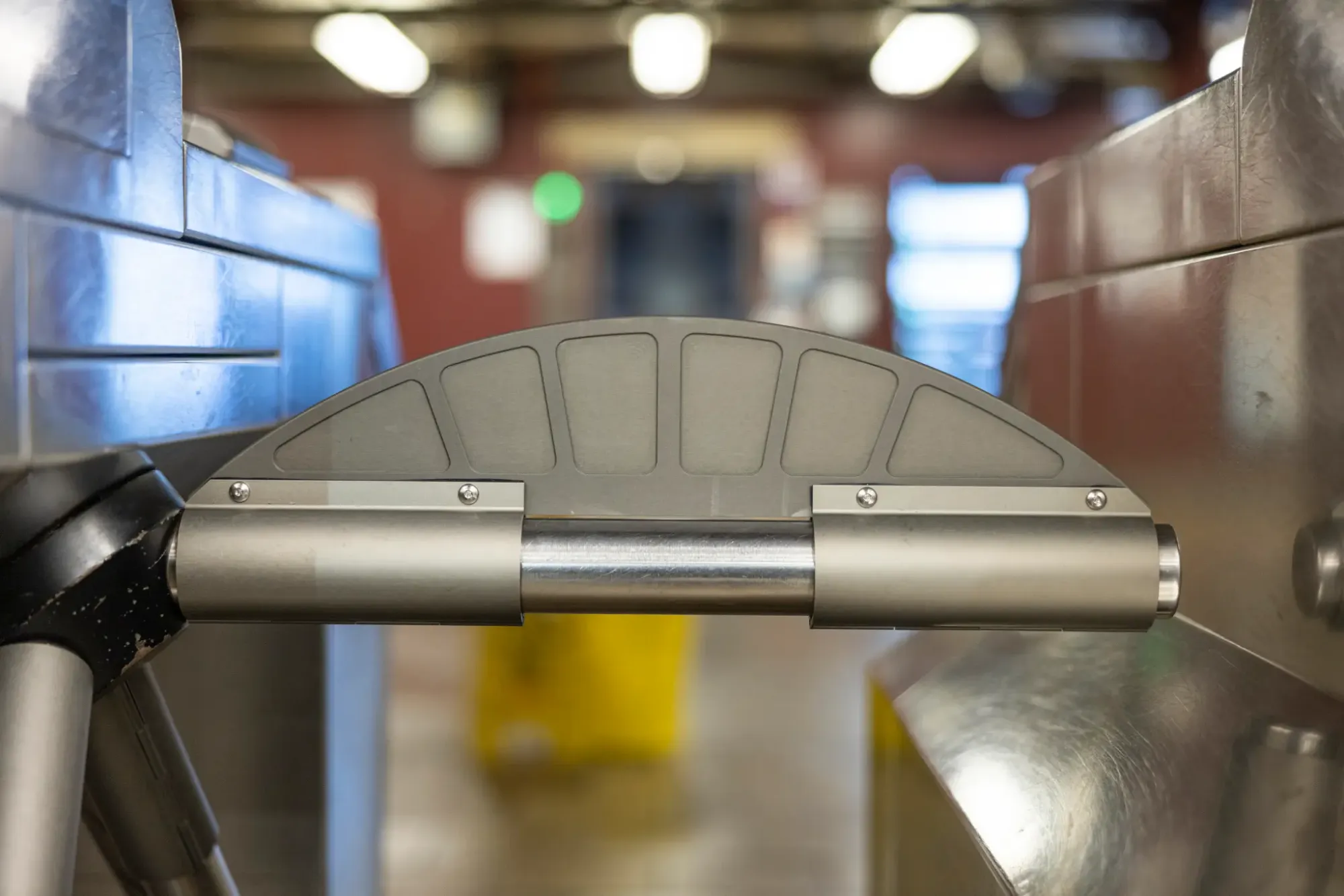
How is this stopping anyone from jumping over?
And below are the "spikes" (they are on top of the side wall):
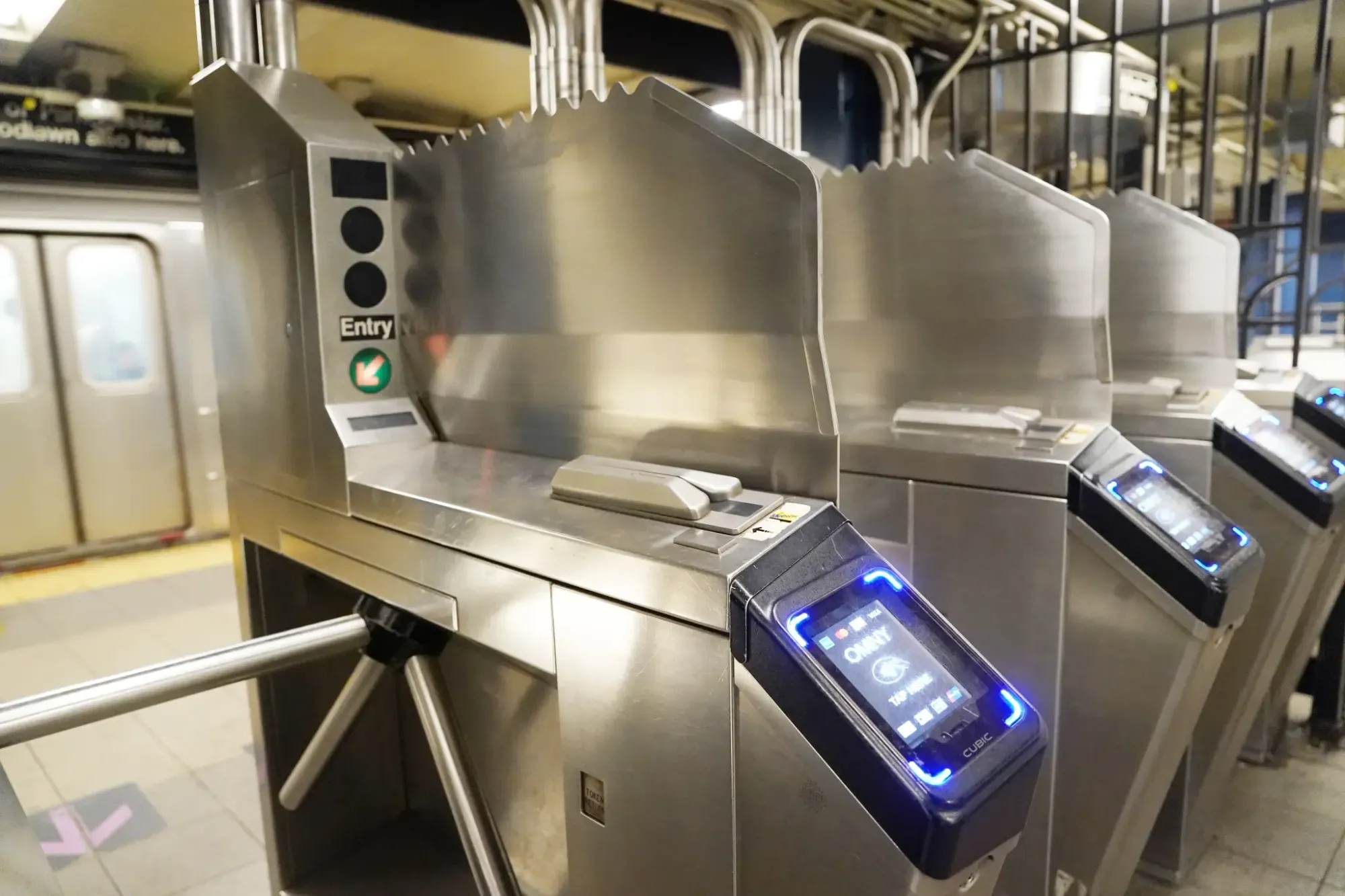
I have rarely seen anyone "climbing" over. The usual manuevre is hurdling over so this is a mystery.
The same song is being played. A few months after these toothless interventions appeared, the MTA has declared victory, and will spend more money to install them everywhere!
It took the NY Post reporter one trip to two subway stations to eye-witness what the study's authors apparently couldn't see: neither the sleeves nor the spikes are stopping fare evaders (link). Or, it just takes some common sense.
The MTA actually told reporters the following with a straight face: "At stations where the equipment has already been installed, fare evasion has dropped by about 60%." (link)
Let's say this out loud: the MTA believed that those sleeves and spikes have caused a 60% drop in fare evasion.
Again: the MTA determined that those sleeves and spikes have stopped 6 out of every 10 prospective fare evader.
This is the same MTA that told us by letting riders get onto Select buses from every door without validating tickets, they have curbed fare evasion below normal levels.
I can't find details as to how they conducted the study. So let's interpret the quote above.
First, they are describing only those stations with equipment. We don't know what's going on in stations without equipment. If they were to compare the two groups of stations, we'd need to know how they selected the stations for this pilot program. Are the stations with equipment similar to those without? (Probably not, unless they designed a rigorous testing program before the pilot started.)
Second, surely some of the reduction in fare evasion reflect a general trend. For example, as more companies are pushing employees back to the office, we have an influx of commuters who have well-paid jobs and are thus less likely to evade fares. Any pre-post type analysis must include factors like this.
Third, we also don't know if the equipment installation is all-or-none at each station, or what proportion of each station's turnstiles have those sleeves and spikes?
Fourth, the MTA is simultaneously rolling out many different interventions. I see warning notices, and hear warning messages. Sometimes, there are guards standing near the turnstiles (although I have never seen any guard stopping an ongoing act of fare evasion.) How did the study account for these other factors?
Fifth, by claiming a "drop", they must be comparing a current measurement against some baseline. What is this baseline?
Sixth, how do they even measure fare evasion? Do they have staff counting fare evaders? Are they analyzing video footage?
Designing a proper test to measure the effect of the sleeves and spikes is an interesting project.